Christian Eloquence
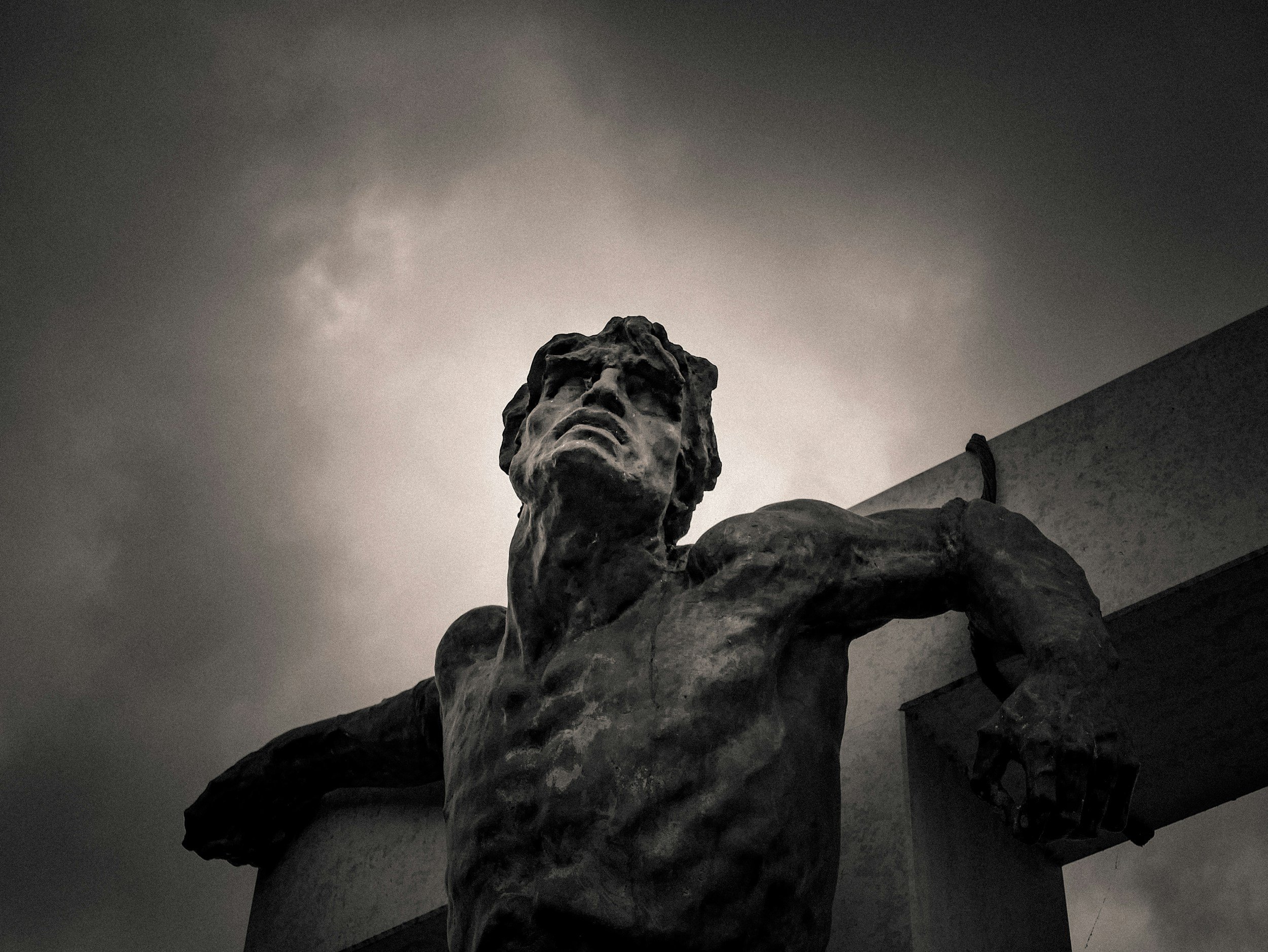
I went to Father Joshua’s Whitfield talk last week. One thing that he was trying to stress was that “the perfection of Christian eloquence is martyrdom.”
It can be tempting to think that Christian eloquence is rooted in rhetoric. It’s possible to root eloquence in the “great things we have done in the Lord’s name.” (Matthew 7:22). Maybe eloquence is rooted in productivity and success at work. Or maybe knowledge.
These things can be good, but there’s something else about Martyrdom.
Prior to his martyrdom, St Ignatius of Antioch was trying to tell the Christian community to not defend him as he was approaching his death. He said “Surely, I do not want you to court the good pleasure of men, but to please God, as indeed you do please Him. Yes, I shall never again have such an opportunity of winning my way to God, nor can you, if you remain quiet, ever have your name inscribed on a more glorious achievement. For, if you quietly ignore me, I am the word of God; but if you fall in love with my human nature, I shall, on the contrary, be a mere sound.”
I was just thinking about that this tonight. At first, it made me think of what the angel told him John in Revelation.
“Write this: Blessed are the dead who from now on die in the Lord.” “Yes,” says the Spirit, “they will rest from their labors, for their deeds follow them.” (Revelation 14:13)
Now we may not be called to shed our blood in this life but we are certainly called to be faithful! JP2 made this point in an address at the 2000 World Youth Day conference.
“Dear friends, to believe in Jesus today, to follow Jesus as Peter, Thomas, and the first Apostles and witnesses did, demands of us, just as it did in the past, that we take a stand for him, almost to the point at times of a new martyrdom: the martyrdom of those who, today as yesterday, are called to go against the tide in order to follow the divine Master, to follow “the Lamb wherever he goes” (Rev 14:4). It is not by chance, dear young people, that I wanted the witnesses to the faith in the twentieth century to be remembered at the Colosseum during this Holy Year.
Perhaps you will not have to shed your blood, but you will certainly be asked to be faithful to Christ! A faithfulness to be lived in the circumstances of everyday life: I am thinking of how difficult it is in today’s world for engaged couples to be faithful to purity before marriage. I think of how the mutual fidelity of young married couples is put to the test. I think of friendships and how easily the temptation to be disloyal creeps in.
I think also of how those who have chosen the path of special consecration have to struggle to persevere in their dedication to God and to their brothers and sisters. I think of those who want to live a life of solidarity and love in a world where the only things that seem to matter are the logic of profit and one’s personal or group interest.”
Let’s face it life is hard. Christian life is hard. Don’t we mourn and weep in this valley of tears? But we cannot truly live without martyrdom. For the blood of the martyrs is the seed of the church (St. Jerome). Furthermore, “unless a grain of wheat falls into the earth and dies, it remains alone; but if it dies, it bears much fruit.” (John 12:24)
We’re ultimately going to need Christ’s grace for these everyday acts of martyrdom. This is something we can’t do in our own. And we most certainly can’t do it pridefully. As Psalm 51:18-19 states, “For you take no delight in sacrifice;if I were to make a burnt offering, you would refuse to accept it. My sacrifice, O God, is a broken spirit; a contrite and humble heart,O God, you will not spurn”
So let’s not be afraid to have a humble heart that is completely open to God’s will and the sacrifices he calls us to. Maybe in prayer, he’s calling us to go deeper in our spiritual lives. Maybe it’s something hard such as forgiveness. Maybe it looks like listening to and serving who our Lord calls the “Least of These.” Maybe it looks like asking for the grace to be a martyr for the Lord just for today in the way that He wants.
No sacrifice humbly done will ever be in vain, and we shall thus reach the perfection of Christian eloquence.